Product Description
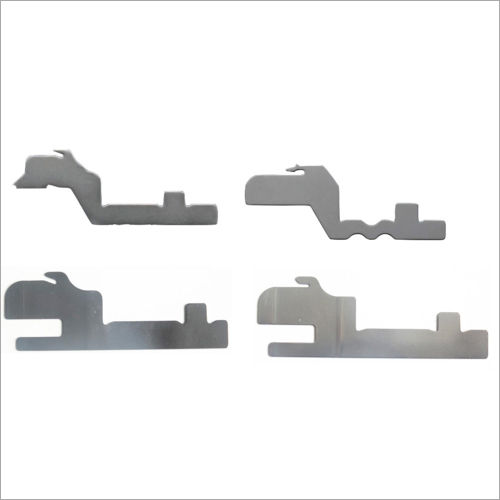
Sinker parts are used for making a weight called sinker which is affixed to your fishing line between 6 and 10 inches above the hook. As a result, your bait will remain close to the lake or river bottom, where the majority of fish congregate. Pinch on one or two little split-shot sinkers to your line for the majority of shore fishing. Solid lead is typically used to make fishing sinkers. Sinker parts have a robust structure, anti-corrosive nature, seamless finishing and durability. These tools crimp on your line, others that let the line pass easily through them.
Exceptional Precision and DurabilityManufactured using state-of-the-art precision machining and heat-treatment, these sinkers parts guarantee exceptional wear-resistance and a highly polished, corrosion-resistant surface. The smooth, burr-free edges and accurate dimensions allow for seamless integration with modern multi-system circular knitting machines, extending service intervals and promoting longer operational life.
Versatile Application and CustomizationOur sinkers are suitable for a broad range of knitting methods, supporting gauges from 14G to 32G. Designed for both single and double jersey fabric applications, as well as interlock and rib knits, they can be customized in dimension, weight, and packaging to fit specific machine models or process needs. This versatility ensures maximum compatibility and performance for high-speed knitting operations.
FAQs of Sinkers Parts:
Q: How do sinkers parts improve knitting efficiency in circular knitting machines?
A: Sinkers play a crucial role in the formation of fabric loops by aiding precise movement and positioning of the yarn and needles. Their high-grade alloy steel construction, polished surface, and precision racking minimize friction and wear, facilitating high-speed production and consistent fabric quality.
Q: What materials are used in the manufacturing of these sinkers, and why?
A: Our sinkers are crafted from high-grade alloy steel, selected for its excellent corrosion resistance, high wear resistance, and capability to withstand operational temperatures up to 250C. This choice of material guarantees a long service life and reliability in demanding production environments.
Q: When should I consider replacing the sinkers in my knitting machine?
A: Although our sinkers require minimal maintenance due to their durability, it is advisable to periodically inspect them for signs of wear or surface damage, especially during scheduled maintenance intervals. Replacement is recommended when visible wear or impaired performance is detected to maintain optimal fabric quality.
Q: Where can these sinkers be used, and what machines are they compatible with?
A: These sinkers are suitable for use in circular knitting machines that require precise loop formation, including single jersey, double jersey, rib, and interlock machines. They are designed for compatibility with multi-system machines supporting gauges from 14G to 32G and work seamlessly with latch needles.
Q: What is the customization process for sinkers, and how can I specify my requirements?
A: Customization is available for dimensions, gauge, packaging, and weight to match specific machine models or customer preferences. Simply provide detailed specifications or machine model information during your inquiry, and our engineering team will ensure the sinkers are tailored to fit your needs.
Q: How do sinkers contribute to fabric structure and formation during knitting?
A: Sinkers assist in the controlled movement of yarn and needles, enabling accurate loop formation and consistent stitch density, which is critical for the stability and structure of the final fabric in high-speed knitting operations.
Q: What are the main benefits of using these sinkers in knitting production?
A: Key benefits include high operational reliability, minimal maintenance needs, extended service life, compatibility with a broad range of machines and knitted structures, and adherence to international quality standards, ensuring efficient and consistent fabric production.





 Send Inquiry





 Send Inquiry
 Send Inquiry
 Send SMS